A new report, released last month by the peak body for social services in the NT, reveals the dramatic cost of living increases for Territorians over the past decade.
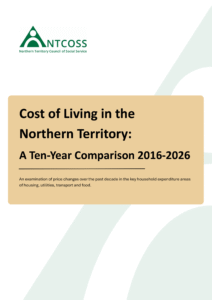
According to the NT Council of Social Service’s (NTCOSS) report, Cost of Living in the Northern Territory: A Ten-Year Comparison 2016-2026, Territorians are struggling to meet their basic needs, with NT having the highest rents nationally, transport costs skyrocketing and remote communities spending 40% more on food.
In response to the report, Lutheran Care has joined with NTCOSS and other sector leaders to propose solutions for Federal and Territory Government to prevent Territorians being entrenched in poverty.
Co-authored by Mollie Harding and Jonathan Pilbrow, the report highlights how people in the Northern Territory are finding it harder to access housing, energy, transport and food than a decade ago.
With incomes failing to rise at the same rate as the cost of essentials for many Territorians, more NT households are unable to afford their basic needs.
Key findings of the report include:
- All working age income support payments are currently well beneath the poverty line
- The NT has the highest average rent in Australia, with the number of available private rentals plummeting from 1,354 in 2016 to just 257 this year.
- Weekly transport costs now consume almost a fifth of the average household budget, and rising fuel costs continue to affect remote Territorians disproportionately. With no public transport networks outside of Darwin and Alice Springs, taxi fares have increased by over 26% in the last decade.
- Almost 1 in 2 Territorians experienced food insecurity in 2025 (46% compared to just 33% nationally). The average cost of a healthy food basket in a remote NT store was 40% more than in district centres.
- NT home loan repayments have more than doubled in the past decade with average weekly payments up 142% since 2016.
Susan Richards, Lutheran Care’s Executive Manager Northern Territory, says “There’s a point where the cost of living stops being about tightening the household budget and becomes a fight to keep a roof over your head. When people are forced to choose between food, electricity, medical needs and rent, we’re no longer talking about financial pressure. We’re talking about people being pushed towards crisis.
“Our frontline teams are already seeing increasingly complex financial hardship, with people navigating mounting debts, predatory lending practices and financial systems that can leave them even more vulnerable. That’s the human reality behind the figures in this report.”
Key recommendations from the report for Federal and Territory Governments include:
- Substantially and immediately increase the Remote Area Allowance and other income support payments, to above the poverty line.
- Set a needs-based national target for social housing, and embedding social and affordable housing in any new NT developments.
- Amending rental protection legislation to provide NT renters with the same protections as renters everywhere else in the country.
- Making the NT Concessions Scheme benefits easier to access for eligible Territorians, and extending eligibility to all Services Australia Health Care Card holders.
- Indexing the MVR concession.
- Extend the 30 essential items subsidy to include more healthy food options for remote stores.
“Our experience across remote communities shows that affordability means little without accessibility,” Ms Richards adds. “Support may be available on paper, but that doesn’t mean people can access it in practice.
“Our financial counsellors spend significant time helping people simply prove their identity or access basic banking services. Add distance, rising fuel costs, enormous food prices and digital barriers, and even the most basic assistance can become out of reach.
“When funding fails to keep pace with the real cost of delivering services, it’s the community that pays the price. Organisations are forced to make difficult decisions about staffing and service delivery, meaning fewer people can access the support they need.
“Proper indexation isn’t about giving community organisations more. It’s about ensuring we can continue delivering the services we’re already funded to provide. Without it, services shrink at the very time communities need them most.”
“We cannot keep relying on crisis services to catch people after they’ve fallen. Debts are becoming more sophisticated and our frontline teams are increasingly supporting people at the pointy end of financial crisis, stretching them away from important preventative work.”
“This report reinforces a critical recommendation to raise the remote allowance, which will offer greater support to people before waiting until they reach breaking point. Prevention must be a priority, not an afterthought.”
The community sector peak body is recommending federal government welfare payments be increased along with the remote area allowance for people in isolated parts of NT.
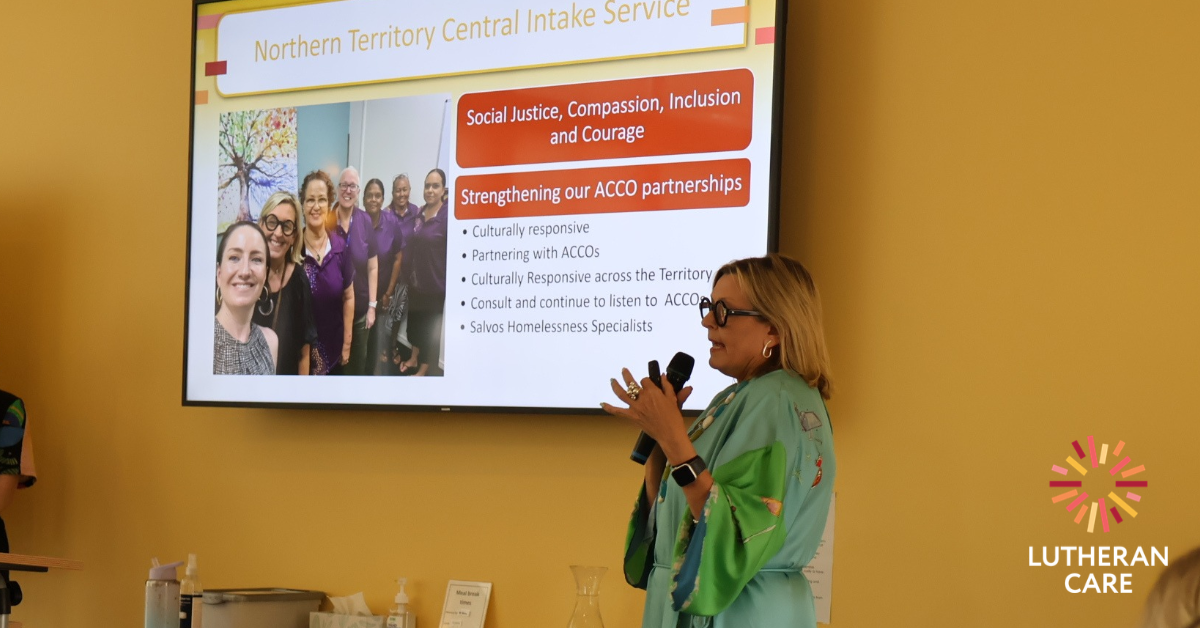
Whilst founded in South Australia in 1969, Lutheran Care has had a presence in the Northern Territory since 2009. Lutheran Care delivers Financial Wellbeing programs across Mpartnwe – Alice Springs, and its staff offer outreach services into dozens of remote Aboriginal communities. Working alongside partner agencies, Lutheran Care’s Territory-wide Northern Territory Central Intake Service also links Territorians experiencing or at risk of homelessness with specialist homelessness services.