
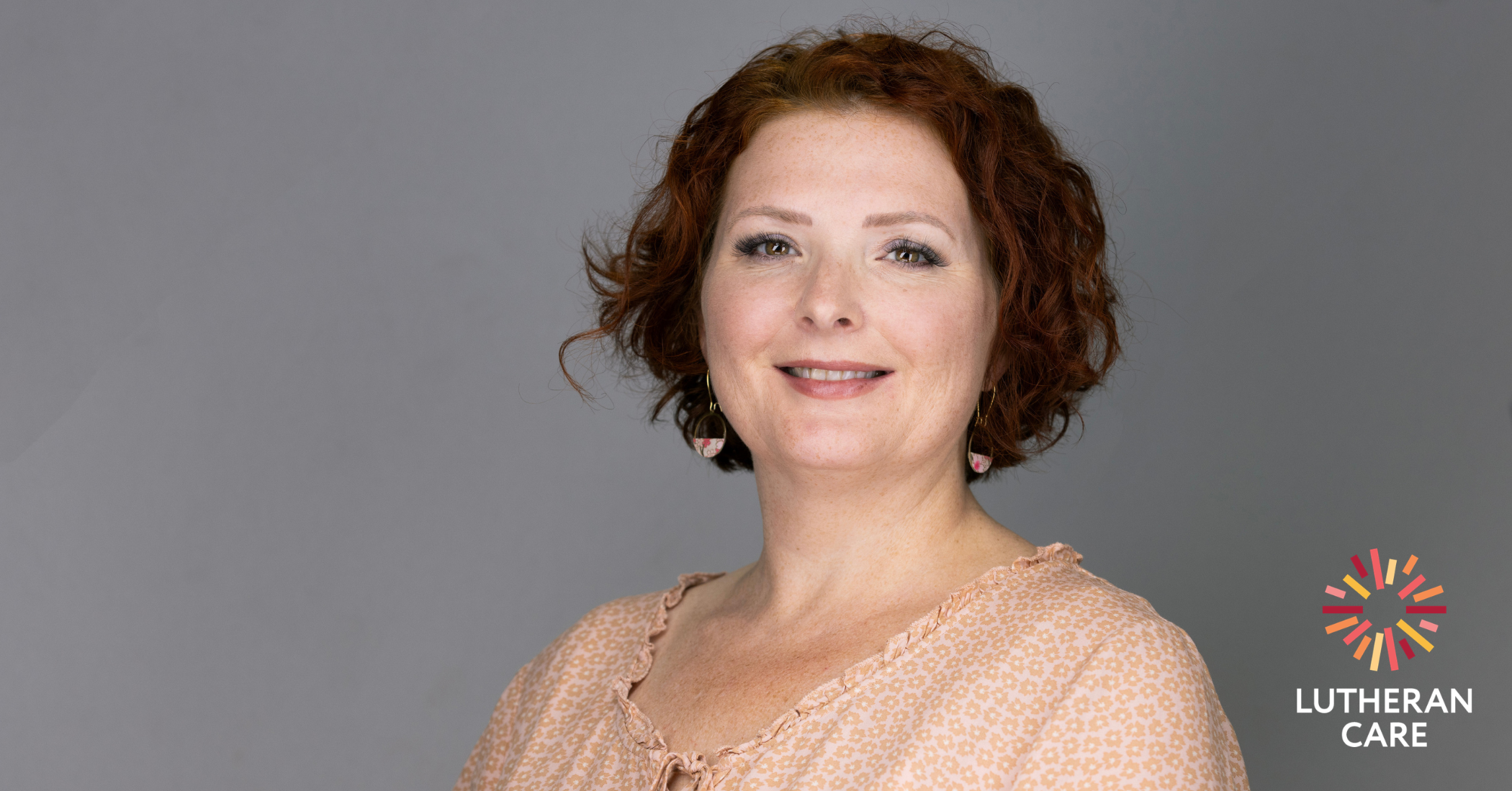
After an unconventional path from leaving school at 15 to leading Lutheran Care’s Foster Care program, Michelle Casey brings deep purpose, resilience and integrity to the work of supporting children, families and carers. As our Senior Manager Foster Care Services, Michelle has shared the following reflections as part of our spotlight on Lutheran Care women for International Women’s Day 2026.
1. What motivates you to work at Lutheran Care?
What motivates me to work at Lutheran Care is the ability to contribute to work that genuinely matters. I’ve always been driven by a strong sense of purpose, a belief that integrity, thoughtful action and speaking up for those who are often unheard can create real and lasting change for children and families. Over the seven-plus years I’ve been here, what has kept me grounded and motivated is the people I work with every day. My team, who share a deep commitment to children’s wellbeing and the support of foster carers, are the reason I continue to show up with energy and hope. The relationships we’ve built, the trust we’ve formed, and the collective care we bring to this work remind me why it’s worth doing. The sector can be challenging, and the work can be complex, but the impact we see, big and small, is meaningful. I’m motivated by the belief that when we act with integrity, hold ourselves accountable, and stay connected to the people we serve and the colleagues beside us, we can contribute to safer, stronger and more compassionate outcomes for the children and families we support.
2. Can you tell us a bit about your journey to reaching this point in your career?
My pathway into leadership hasn’t been a straight line, and I think that’s part of what makes it meaningful. I left school at age 15 due to personal challenges and began my working life in a very different space, training as a beautician and working as an in‑store make‑up artist at The Body Shop in Glasgow. At 19, I travelled to Australia as a backpacker, and life unfolded quickly from there with marriage, motherhood, and then a divorce by the age of 23. When I was 25 I made the decision to pursue social work, something I had always felt drawn to but never believed was within reach. Because I didn’t finish high school, I began with Foundation Studies at UniSA to rebuild my confidence and create a pathway into university. My children were aged five and four when I started, and I studied full‑time for five years, completing my social work degree with Honours and graduating in the top 5% of the state. My student placements, first in foster care and later in youth justice, shaped the direction of my career. After graduation, I began working with the Department for Child Protection in a reunification team, where I spent five years before moving into the Non-Government Organisation sector. I worked in family support and then as a Senior Practitioner across both foster care and residential care. Over time, I progressed into leadership roles supporting foster care recruitment, assessment, training and practice development. During my years as a qualified social worker, my personal life continued to evolve as well; I remarried and welcomed two more children. Balancing family life with the demands of frontline work and study has shaped my resilience, my perspective, and the way I lead. In 2019, I joined Lutheran Care in a newly created Operations Manager role in Foster Care, and in 2024 I stepped into the Senior Manager position as the program and team continued to grow. Looking back, my career has been shaped far less by traditional pathways and more by determination, purpose, and the belief that every life experience, especially the difficult ones, can be used to make a meaningful contribution. My lived experience, the people who have walked alongside me, and the work itself have all influenced the leader I’ve become.
3. How do this year’s International Women’s Day themes, “Give to Gain” and /or “Balance the Scales” resonate with you?
“Give to Gain” reflects the idea that meaningful growth comes from contributing to the wellbeing and empowerment of others, and that shared responsibility strengthens both community and self. “Balance the Scales” is a reminder of the persistent inequalities women face, and of the conscious effort required to act ethically, advocate for others, and model what equity looks like in practice. Both themes speak to values I try to live by: integrity, clarity of intent, and the courage to do what is right, even when it is difficult.
4. Which woman inspires/inspired you and why?
I don’t think there has been one single woman who inspired me, but rather, different women at different stages of my life. As a child, I was captivated by Anne of Green Gables and read all of the books in the series; her imagination, independence, and refusal to be diminished gave me a lot of hope as I navigated my own challenges through childhood. As a teenager, I was inspired by Nancy Wake and her extraordinary courage and moral conviction in the face of real danger. In more recent years, I’ve been inspired by women who are willing to speak truth to power, such as Francesca Albanese, whose work reflects a deep commitment to human rights and a willingness to speak up with clarity and conviction, no matter the personal cost. Across all of these influences, the common thread for me is courage, intellectual courage, moral courage, and the determination to stand firm in your values, even when it would be easier not to.
5. What is the best piece of advice you have received from a woman in your life?
One piece of guidance that has stayed with me came from a university lecturer, who encouraged us to always be clear about our intent, to understand the “why” behind our actions and be accountable for the impact our actions have on others. Over time, that idea has grown into something very philosophical for me. Being clear about your intent requires self-awareness, humility, and a willingness to examine your own power. It asks you to act with purpose and with integrity rather than ego. I’ve come to believe that clarity of intent is a form of ethical discipline that anchors you in complex situations and requires you to remain accountable for the influence you carry. That has become a quiet but steady compass in my life.
6. What are your hopes for young women today?
As a mother of two daughters and two sons, my hope for young women today is deeply personal. Raising both daughters and sons has reinforced for me how important it is to teach all young people about respect, accountability, and equality. I hope young women today grow up with an unshakeable sense of their own worth, not something they feel they have to earn through being pretty or useful, but something they know is inherent. I hope they trust their instincts, honour their boundaries, and feel confident walking away from anything, be that a relationship, a workplace, or an expectation, that does not respect or value them. Most of all, I hope they never feel pressure to shrink themselves for the comfort of others, and that they always feel entitled to safety, autonomy, and opportunity.